Mpox is an infectious disease that causes symptoms such as a painful rash, swollen lymph nodes, fever, headaches, muscle and back pain, and fatigue. Most people recover fully, but some can develop severe illness.
It is caused by the monkeypox virus (MPXV), a DNA virus from the Orthopoxvirus family, which also includes smallpox and cowpox viruses. There are two main virus clades: clade I and clade II, each with subclades.
A global outbreak of clade IIb began in 2022 and is ongoing, including in Africa. At the same time, outbreaks of clades Ia and Ib are increasing in the Democratic Republic of the Congo and other African countries, with clade Ib detected outside Africa as of August 2024
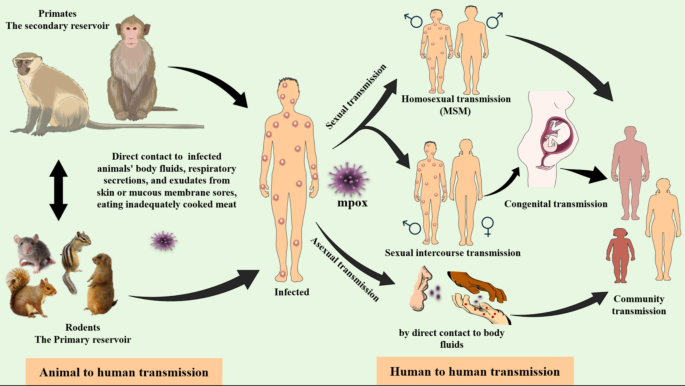
Mpox spreads mainly through close person-to-person contact, including skin-to-skin contact, kissing, sexual contact, and close face-to-face interaction that can release infectious respiratory particles. People with multiple sexual partners are at higher risk. The virus can also spread through contaminated objects like clothing or bedding, needle injuries in healthcare settings, and community practices such as tattooing.
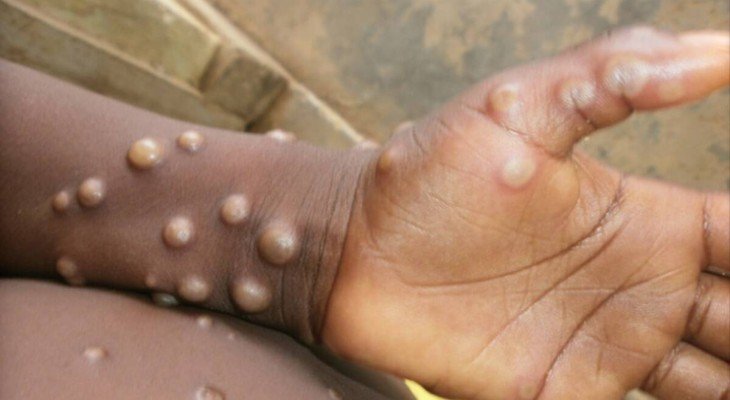
Mpox causes signs and symptoms which usually begin within a week but can start 1–21 days after exposure. Symptoms typically last 2–4 weeks but may last longer in someone with a weakened immune system.
Common symptoms of mpox are:
For some people, the first symptom of mpox is a rash, while others may have fever, muscle aches or sore throat first. The mpox rash often begins on the face and spreads over the body, extending to the palms of the hands and soles of the feet. It can also start on other parts of the body where contact was made, such as the genitals.